From the International Review of Landscape Architecture and Urban Design's Topos Magazine:
Upcoming Events:
Community Meetings:
Showing posts with label Hunter's Point. Show all posts
Monday, August 4, 2014
Saturday, May 17, 2014
Hunters Point Shipyard transformation in home buyers' hands
From SFGate,
With the wooden frames of 88 town houses and flats marching up the hillside off Innes Avenue, Lennar is putting the final touches on its "welcome center": a 3,500-square-foot industrial chic modular building with a fireplace, comfy seating and an expansive deck overlooking the bay.
More at SFGate.
Tuesday, January 17, 2012
Losing Redevelopment is a Game Changer
From SFGate,
Six decades ago, redevelopment agencies were formed across the state to revitalize blighted neighborhoods and create low-income housing. By Feb. 1, as a new state law requires, all 400 of them will be gone.Read more at SFGate
Killing off a multibillion-dollar program is a messy, unprecedented process. The way it unfolds depends on the city - and the day.
...cities can continue with projects that are significantly under way. In San Francisco, for instance, Mission Bay, Hunters Point Shipyard and parts of the Transbay Terminal project can keep going. Under a proposal before the Board of Supervisors, the city would take over low-income housing, local hiring efforts and neighborhood revitalization programs.
Wednesday, January 4, 2012
PGE's December 2011 Hunters Point Shipyard Progress Report
The Shipyard
Not sure what the plan is for the Hunter's Point Shipyard? Then check out Lennar's site at The Shipyard.
Monday, November 14, 2011
Hunters Point Shipyard: One of the most transformative projects in the US
From SFGate:
Read more at SFGate
In the spotlight: The local folks who have been fighting for more than a decade about the future of the Hunters Point Shipyard redevelopment project have always known that it's a big deal, but now they have national confirmation.
The $8 billion, 700-acre project has been selected as one of three "Transformative Investments in the United States" by the Brookings Institution in Washington, D.C.
Read more at SFGate
Friday, November 4, 2011
Hunters Point one of five Bay Area "Extreme Poverty" neighborhoods
Over 40% of the people who live in Hunters Point live below the Federal poverty line, defined as having income of $22,314 or less per year for a family of four.
From the San Jose Mercury News,
From the full Brookings Institute report:
As the first decade of the 2000s drew to a close, the two downturns that bookended the period, combined with slow job growth between, clearly took their toll on the nation’s less fortunate residents. Over a ten-year span, the country saw the poor population grow by 12.3 million, driving the total number of Americans in poverty to a historic high of 46.2 million. By the end of the decade, over 15 percent of the nation’s population lived below the federal poverty line—$22,314 for a family of four in 2010—though these increases did not occur evenly throughout the country.
After declining in the 1990s, the population in extreme-poverty neighborhoods— where at least 40 percent of individuals live below the poverty line—rose by one-third from 2000 to 2005–09.
Why Does Concentrated Poverty Matter?
Being poor in a very poor neighborhood subjects residents to costs and limitations above and beyond the burdens of individual poverty. Summarized in part below, research has shown the wide-ranging social and economic effects that result when the poor are concentrated in economically segregated and disadvantaged neighborhoods. Concentrated poverty can:
Limit educational opportunity. Children in high-poverty communities tend to go to neighborhood schools where nearly all the students are poor and at greater risk of failure, as measured by standardized tests, dropout rates, and grade retention. Low performance owes not only to family background, but also to the negative effects high-poverty neighborhoods have on school processes and quality. Teachers in these schools tend to be less experienced, the student body more mobile, and additional systems must often be put in place to deal with the social welfare needs of the student body, creating further demands on limited resources.
Lead to increased crime rates and poor health outcomes. Crime rates, and particularly violent crime rates, tend to be higher in economically distressed inner-city neighborhoods. Faced with high crime rates, dilapidated housing stock, and the stress and marginalization of poverty, residents of very poor neighborhoods demonstrate a higher incidence of poor physical and mental health outcomes, like asthma, depression, diabetes, and heart ailments.
Hinder wealth building. Many residents in extreme-poverty neighborhoods own their home, yet neighborhood conditions in these areas can lead the market to devalue these assets and deny them the ability to accumulate wealth through the appreciations of house prices. Moreover, the presence of high-poverty neighborhoods can affect residents of the larger metropolitan area generally, depressing values for owner-occupied properties in the region by 13 percent on average.
Reduce private-sector investment and increase prices for goods and services. High concentrations of low-income and low-skilled households in a neighborhood can make the community less attractive to private investors and employers, which may limit local job opportunities and ultimately create a “spatial mismatch” between low-income residents and employment centers. In addition, lack of business competition in poor neighborhoods can drive up prices for basic goods and services—like food, car insurance, utilities, and financial services—compared to what families pay in middle-income neighborhoods.
Raise costs for local government. The concentration of poor individuals and families—which can result in elevated welfare caseloads, high rates of indigent patients at hospitals and clinics, and the need for increased policing—burdens the fiscal capacity of local governments and can divert resources from the provision of other public goods. In turn, these dynamics can lead to higher taxes for local businesses and non-poor residents.
From the San Jose Mercury News,
In five census tracts, four of them in the East Bay, more than 40 percent of residents live below the poverty line, according to the Brookings Institution report.
The neighborhoods are in downtown Berkeley, uptown Oakland, Alameda Point and parts of West Oakland and San Francisco's Hunters Point.
From the full Brookings Institute report:
As the first decade of the 2000s drew to a close, the two downturns that bookended the period, combined with slow job growth between, clearly took their toll on the nation’s less fortunate residents. Over a ten-year span, the country saw the poor population grow by 12.3 million, driving the total number of Americans in poverty to a historic high of 46.2 million. By the end of the decade, over 15 percent of the nation’s population lived below the federal poverty line—$22,314 for a family of four in 2010—though these increases did not occur evenly throughout the country.
After declining in the 1990s, the population in extreme-poverty neighborhoods— where at least 40 percent of individuals live below the poverty line—rose by one-third from 2000 to 2005–09.
Why Does Concentrated Poverty Matter?
Being poor in a very poor neighborhood subjects residents to costs and limitations above and beyond the burdens of individual poverty. Summarized in part below, research has shown the wide-ranging social and economic effects that result when the poor are concentrated in economically segregated and disadvantaged neighborhoods. Concentrated poverty can:
Limit educational opportunity. Children in high-poverty communities tend to go to neighborhood schools where nearly all the students are poor and at greater risk of failure, as measured by standardized tests, dropout rates, and grade retention. Low performance owes not only to family background, but also to the negative effects high-poverty neighborhoods have on school processes and quality. Teachers in these schools tend to be less experienced, the student body more mobile, and additional systems must often be put in place to deal with the social welfare needs of the student body, creating further demands on limited resources.
Lead to increased crime rates and poor health outcomes. Crime rates, and particularly violent crime rates, tend to be higher in economically distressed inner-city neighborhoods. Faced with high crime rates, dilapidated housing stock, and the stress and marginalization of poverty, residents of very poor neighborhoods demonstrate a higher incidence of poor physical and mental health outcomes, like asthma, depression, diabetes, and heart ailments.
Hinder wealth building. Many residents in extreme-poverty neighborhoods own their home, yet neighborhood conditions in these areas can lead the market to devalue these assets and deny them the ability to accumulate wealth through the appreciations of house prices. Moreover, the presence of high-poverty neighborhoods can affect residents of the larger metropolitan area generally, depressing values for owner-occupied properties in the region by 13 percent on average.
Reduce private-sector investment and increase prices for goods and services. High concentrations of low-income and low-skilled households in a neighborhood can make the community less attractive to private investors and employers, which may limit local job opportunities and ultimately create a “spatial mismatch” between low-income residents and employment centers. In addition, lack of business competition in poor neighborhoods can drive up prices for basic goods and services—like food, car insurance, utilities, and financial services—compared to what families pay in middle-income neighborhoods.
Raise costs for local government. The concentration of poor individuals and families—which can result in elevated welfare caseloads, high rates of indigent patients at hospitals and clinics, and the need for increased policing—burdens the fiscal capacity of local governments and can divert resources from the provision of other public goods. In turn, these dynamics can lead to higher taxes for local businesses and non-poor residents.
Thursday, October 13, 2011
Hunters Point Shipyard Artist-in-Residence Program
Now accepting applications for 18-month studio residency at the Hunters Point Shipyard
Residency is open to all visual or cross-disciplinary artists at least 18 years of age who are working, living or involved with the Bayview-Hunters Point Community.
Includes:
Large Studio space (work-in only)
Spring and Fall Open Studios Fees and Postcards
$500 stipend
Access to one of the largest artist colonies in the US
Residency Date: 12/14/2011 – 6/14/2013
Application Deadline: 11/5/2011
For More Information & Application:
Go to www.shipyardtrust.org, or contact
STAR Artist-in-Residence Program
415-822-0922; info@shipyardtrust.org
Friday, September 2, 2011
Toxic waste cleanup plan for San Francisco shipyard released by Navy
From the SF Examiner,
Read more at the San Francisco Examiner
The Navy announced plans Thursday to cap toxins on one of the more highly contaminated parcels of the Hunters Point shipyard, although some of the soil with radiological contamination is slated for removal.
Along with a shoreline embankment to prevent pollution from leaking into San Francisco Bay, the measures will be enough to make the area around the former landfill site safe for human habitation, according to naval officials.
But the Navy’s proposal is not likely to satisfy environmentalists.
The Navy is cleaning up a Hunters Point parcel.
- 22 Acreage of site
- 14.5 Acreage already capped
- 30 feet Depth of potential toxins
- 1.16 million Cubic yards of excavation for complete removal of toxins
Read more at the San Francisco Examiner
Tuesday, August 16, 2011
Home Ownership Assistance Workshops
DON’T MISS THE OPPORTUNITY
Workshop Dates & Locations:
WEDNESDAY, AUGUST 24, 2011
6:00 PM – 7:30 PM
Lennar Trailers at Hunters Point Shipyard Corner of Donahue St & Galvez Ave
WEDNESDAY, OCTOBER 5, 2011
6:00 PM – 7:30 PM
Bayview Opera House 4705 Third Street, San Francisco
WEDNESDAY, NOVEMBER 9, 2011
6:00 PM – 7:30 PM
Bayview Opera House 4705 Third Street, San Francisco
REGISTER EARLY -- SPACE IS LIMITED REGISTRATION:
Please contact Tim Orozco at 415.344.8855 or Tim.Orozco@lennar.com
Visit our website at www.hunterspointcommunity.com
Thursday, August 11, 2011
Hunters Point Naval Shipyard Tours
HPNS Bus Tours:
Bus tours of the Hunters Point Naval Shipyard are being scheduled for Friday August 26 & Saturday August 27. The shipyard tour is anticipated to include: Sites 7 & 18, Parcel C, E-2 Landfill, the Crane, Gun Mole Pier, and Dry dock area. Tours on each day will last approximately 1.5 hours. Limited seating is available on a first come, first served basis. The deadline for reserving a space is Friday, August 19. Cantonese or Spanish translation will be available during a tour if requested a minimum of 72 hours in advance (Tuesday, August 23 for the Friday tour or Wednesday, August 24 for the Saturday tour).
Tour space is currently available the following dates/times.
Friday, August 26 – 10am, 1pm, 4pm
Saturday, August 27 – 1pm, 4pm
If you are interested in attending a tour, please leave a message on the HPNS Information Line at (415) 295-4742 or send an email to info@sfhpns.com. Be sure to leave your name, telephone number, and include two tour dates and times that you are available, in case your first choice is already taken. You will be contacted with more information. Cantonese or Spanish translation will be available during a tour if requested a minimum of 72 hours in advance. Be sure to indicate which language you need translation for.
Bus tours of the Hunters Point Naval Shipyard are being scheduled for Friday August 26 & Saturday August 27. The shipyard tour is anticipated to include: Sites 7 & 18, Parcel C, E-2 Landfill, the Crane, Gun Mole Pier, and Dry dock area. Tours on each day will last approximately 1.5 hours. Limited seating is available on a first come, first served basis. The deadline for reserving a space is Friday, August 19. Cantonese or Spanish translation will be available during a tour if requested a minimum of 72 hours in advance (Tuesday, August 23 for the Friday tour or Wednesday, August 24 for the Saturday tour).
Tour space is currently available the following dates/times.Friday, August 26 – 10am, 1pm, 4pm
Saturday, August 27 – 1pm, 4pm
If you are interested in attending a tour, please leave a message on the HPNS Information Line at (415) 295-4742 or send an email to info@sfhpns.com. Be sure to leave your name, telephone number, and include two tour dates and times that you are available, in case your first choice is already taken. You will be contacted with more information. Cantonese or Spanish translation will be available during a tour if requested a minimum of 72 hours in advance. Be sure to indicate which language you need translation for.
Monday, August 8, 2011
IBNA: EPA TAG HPS Fact Sheet
![]() |
| IBNA EPA TAG Fact Sheet |
IBNA: India Basin Neighborhood Association
EPA: Environmental Protection Agency
TAG: Technical Assistance Grant
HPS: Hunters Point Shipyard
Parcels UC-1 & UC-2 Draft Finding of Suitability for Transfer
Discuss the report with a scientist (mikemcgowan@arcecology.org) at Arc Ecology, 1331 Evans Avenue, SF, CA 94124, (415) 643-1190.
Learn more about the local EPA Technical Assistance Grant: contact Jackie Lane: Lane.Jackie@epa.gov (415) 972-3236.
Visit the India Basin Neighborhood Association website http://www.indiabasin.org/
Email IBNA at info@indiabasin.org or telephone them at: (415) 938-6170.
Bayview Hunters Point Community Involvement Manager
Matt Robinson is the new Community Involvement Manager hired by the Navy as a local contact with regard to the Hunters Point Naval Shipyard. He will be assisting Keith Forman with proactively communicating to residents about cleanup work taking place at the shipyard. His job is to help people learn more about the project and assist us in receiving timely answers to questions we may have about this effort.
Please contact him with any questions or for assistance learning what you would like to know about the shipyard. If you like, please ask him to put you on a mailing list so that you will receive occasional emails from him about activities, events and other information surrounding the shipyard.
Matt Robinson
Community Involvement Manager
415-295-4645 (office)
415-295-4742 (Information Line)
info@sfhpns.com
http://www.bracpmo.navy.mil/
They are also in the process of setting up an information line. It will soon be available to assist non-English speakers with messages in Spanish and Cantonese.
Thursday, August 4, 2011
Monday, August 1, 2011
Blue Greenway presentation Aug 17
Today, from Jill Fox of the India Basin Neighborhood Association:
The Blue Greenway is being planned now! The BGW concept is to connect neighborhoods from China Basin to Candlestick Park to each other and to the water. Some great project have already begun on Port property (for example, Heron’s Head park entrance). Come see the rest of the current plans -- and share your ideas for how the Blue Greenway can best serve India Basin, Hunters Point, and the Bayview.
SAVE THE DATE
The next presentation on the draft Blue Greenway Planning and Design Guidelines will be at the Port’s Southern Waterfront Advisory Committee (SWAC) on Wednesday, August 17, 2011 between 6:00 - 8:00 PM at the Eco Center at Heron’s Head Park located at the end of Cargo Way. Click here for a map
FYI: I have read the planning document and think the planning for India Basin past the Port property is weak and that the whole thing is not well linked to what we’ve heard is planned for the Shipyard. There are also 30-foot tall signposts planned for the entire length of the Blue Greenway that residents might want to check out since we will be living with them for years to come.
If you are interested in how the Blue Greenway can benefit our neighborhoods, and serve as the comprehensive planning method it claims to be, you might want to check out these documents and/or attend this meeting. Blue Greenway planning is paid for through a voter-approved bond -- it is our tax money at work! Let’s make sure it works for us.
IBNA will be submitting comments to this plan, but individuals are also welcome to comment to the Port about the plans.
Draft Planning and Design Guidelines
Thursday, July 21, 2011
Parcels UC-1 & UC-2 Draft Finding of Suitability for Transfer
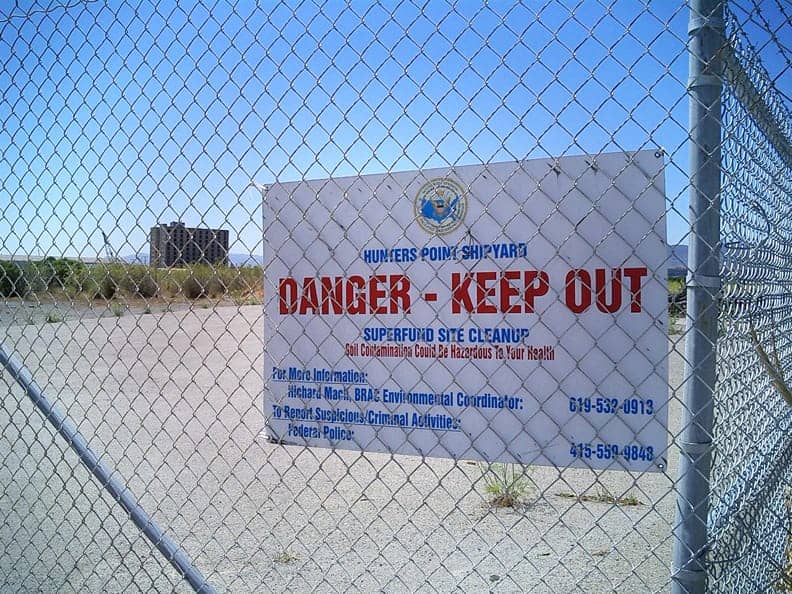
This fact sheet provides a brief summary of the draft finding of suitability for transfer (FOST) of Parcel UC-1 and for transfer of Parcel UC-2 of the Hunters Point Shipyard Superfund Site. The report was prepared by the U.S. Navy. The FOST was prepared to document the readiness of the parcels to be transferred to the San Francisco Redevelopment Agency (SFRA) according to all relevant and appropriate state and federal regulations including the Comprehensive Environmental Response, Compensation, and Liability Act (CERCLA), known as Superfund. The report also describes the readiness of the property for reuse with regard to laws regulating lead paint, asbestos, petroleum, and other hazardous materials not covered by Superfund law. The Navy is required to clean up contaminants that it spilled but does not usually do lead paint or asbestos abatement in buildings. That cleanup will be done by the new owners according to regulations that govern these substances. However, the Navy must disclose what it knows about these other contaminants as part of the FOST report.
This FOST is different from a Finding of Suitability for Early Transfer (FOSET) because the FOST documents that all Navy cleanup has been completed to the satisfaction of the state and federal agencies. A FOSET such as the one described for Parcels B & G in an earlier Fact Sheet describes what remains to be cleaned up, not by the Navy, but by the new property owners under the watchful eyes of the same regulatory agencies. The transfers of UC-1 & UC-2 are not early transfers.
Public involvement is a requirement of the Superfund process. The U.S Environmental Protection Agency's Technical Assistance Grant program provides fact sheets such as this one to inform communities near Superfund sites to assist their understanding and participation in the process.
Saturday, July 16, 2011
Greening a city ... and pushing other colors out
A very interesting article from grist.org,
The Hunters Point Naval Shipyard covers 500 acres on San Francisco's southeastern flank, jutting out into the bay like the fletching of a giant arrow. Acquired by the U.S. Navy in 1940, it was once one of the West Coast's largest shipyards, at its World War II peak employing up to 17,000 people, many of them African Americans who settled nearby. The Navy ended its work at the Shipyard in 1974, devastating the local economy, and it was eventually listed for cleanup as a Superfund-equivalent site. These days, it's a rusting city unto itself, its drydock and warehouses abandoned. For a long time, its only tenants were the city's crime lab and artists drawn by the cheap space and haunting surroundings: a boarded-up diner, its Pepsi sign intact; the giant crane where the Navy once tested rockets; deserted labs that hosted radiological experiments.
As one of the largest chunks of vacant land left in San Francisco -- which has some of the highest land values and housing costs in the country -- the shipyard represents an immense opportunity. And so last summer, after decades of wrangling and neglect, the San Francisco Board of Supervisors approved an ambitious redevelopment plan for the site. If completed, it will be one of the largest developments here since the creation of Golden Gate Park -- and perhaps the most contentious.Read more at grist.org
Tuesday, July 12, 2011
Hunters Point redevelopment given OK to progress
From SFGate,
A San Francisco judge has tossed out most of a legal challenge to the controversial plan to convert the shuttered Hunters Point Naval Shipyard and nearby Candlestick Point into a new neighborhood with more than 10,500 homes, clearing the way for work to begin on the project.
Superior Court Judge Ernest Goldsmith, in a 37-page ruling made public Monday, found that the environmental review for the mega-project was adequate in all regards except one: the early transfer of some parcels of the shipyard.
Read more: SFGate
Thursday, June 23, 2011
SF Public Health Department ethics under investigation – hearing June 23
From The Bay View,The Board of Supervisors will hold a public hearing on the ethics of the Department of Public Health and the Lennar Corp. related to the department’s role regulating environmental health impacts Thursday, June 23, at 1 p.m. in City Hall, Room 263. The hearing was called in response to a community report released by Bayview Hunters Point community organizations in the SLAM Coalition earlier this spring exposing email communication the Health Department and Lennar in an effort to conceal information about adverse health impacts.More at The Bay View
The report details a series of emails since 2006 between EPA, the San Francisco Department of Public Health (SFDPH) and Lennar that reveal a manipulation of facts in order to conceal information regarding asbestos exposure from construction activities at the Shipyard and present false claims in support of Lennar’s redevelopment plan. The emails were obtained through a Freedom of Information Act request.
Wednesday, June 22, 2011
End to San Francisco redevelopment may be near
From the San Francisco Examiner
As state budget wrangling continues in Sacramento, San Francisco’s Redevelopment Agency is waiting for the end — or a significant change — to what it does.
The end of the agency in The City could mean the ax for nearly a dozen projects that would provide hundreds of affordable-housing units, according to Redevelopment Agency Executive Director Fred Blackwell.
Blackwell addressed the agency’s commission Tuesday to discuss the limbo condition of two state Assembly bills that passed muster with lawmakers last week, but have yet to be decided by Gov. Jerry Brown, who wants to eliminate the agencies statewide.
“The hit in San Francisco would be pretty substantial,” Blackwell said in a phone interview, noting threats to efforts such as business revitalization on Third Street in the Bayview district and a push to revamp the mid-Market Street neighborhood.
Subscribe to:
Posts (Atom)


